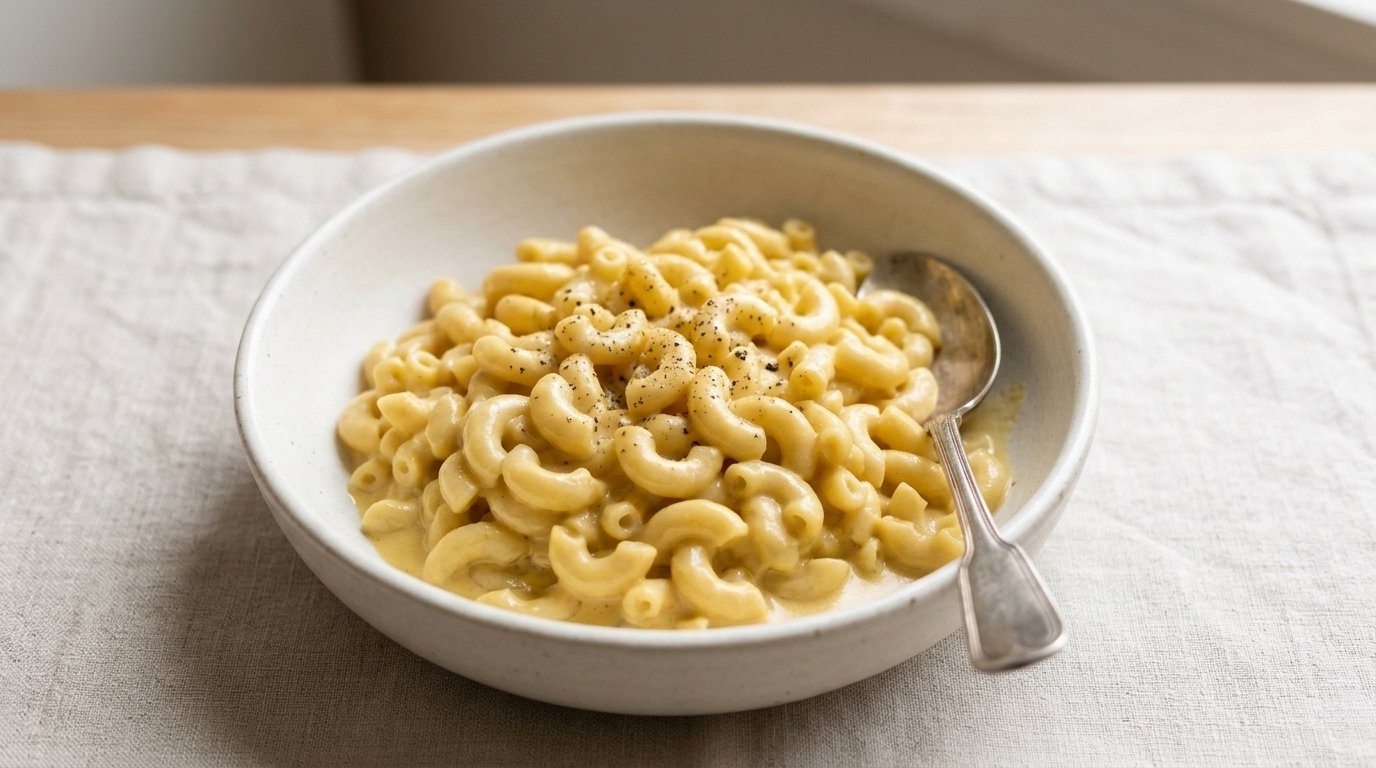
This vegan mac and cheese is a stovetop recipe: elbow macaroni folded into a smooth, savory sauce blended from soaked cashews, nutritional yeast, plant milk, lemon and a little miso. There is no roux, no oven and no store-bought vegan cheese, and the whole thing is made in one pasta pot plus a blender.
Set your expectations honestly. A cashew sauce will not stretch or melt like dairy cheddar, and this vegan mac and cheese does not pretend to. What it gives you is a creamy, glossy coating with a tangy, cheesy flavor that clings to every piece of pasta, which is what most people actually want from a bowl of mac and cheese.
How this recipe was made: it was written with AI assistance and has not yet been kitchen-tested by Vegan Cravebook. The photo on this page is an AI-generated illustration of the finished dish, not a photo of a tested batch. Read the method and trust your eyes and your taste as you cook.
Why This Vegan Mac and Cheese Works
Two things carry this recipe. The first is soaked cashews blended completely smooth. Soaking softens the nuts so the blender can break them down into a cream instead of a gritty paste, and that cream is what gives the sauce its body. The second is starchy pasta water. The water the macaroni cooked in carries starch, and stirring it in at the end loosens the sauce without making it watery and helps it cling to the pasta.
The flavor comes from layering a few ingredients rather than from any one of them. Nutritional yeast brings the savory, cheesy note. Lemon juice and Dijon mustard add the tang you expect from sharp cheese. Miso adds depth and saltiness, and a pinch of smoked paprika rounds it out. Turmeric is optional and only there for a warmer yellow color.
Vegan Mac and Cheese (Creamy Stovetop Cashew Sauce)
Ingredients
Method
- Soak the cashews. Put the cashews in a heatproof bowl and cover them with just-boiled water. Leave them to soak while you bring the pasta water to a boil and cook the pasta.
- Cook the pasta. Bring a large pot of generously salted water to a boil. Add the macaroni and cook it until it is just shy of al dente, tasting a minute or two before the time on the package. It will finish softening in the hot sauce.
- Save the pasta water. Before draining, scoop out about 1 cup of the cooking water and set it aside. Drain the pasta and keep the empty pot.
- Blend the sauce. Drain the soaked cashews and put them in a blender with the soy or oat milk, nutritional yeast, olive oil, lemon juice, miso, Dijon mustard, garlic powder, onion powder, smoked paprika, turmeric if using, and 1 tsp salt. Blend until the sauce is completely smooth, with no grit when you rub a drop between your fingers. A high-speed blender gets there fastest; a regular blender needs longer and may need a pause to scrape down the sides.
- Heat the sauce. Pour the sauce into the empty pasta pot over low heat. Stir constantly with a spatula, scraping the bottom, until the sauce warms through, thickens and turns glossy.
- Combine. Add the drained macaroni and stir until every piece is coated. Add the reserved pasta water a splash at a time, stirring after each addition, until the sauce is loose, creamy and flows slowly off the spoon.
- Season and serve. Taste and adjust: more salt for savoriness, a little more lemon juice for tang. Serve right away, while the sauce is at its creamiest.
Notes
Allergen note: cashews are a tree nut, and tree nuts are one of the major food allergens listed by the U.S. Food and Drug Administration. Wheat pasta also contains wheat, another major allergen. This recipe is not suitable for anyone avoiding either.
If this one becomes a weeknight regular, keep an eye on Vegan Cravebook for more cozy vegan dinners.
Texture: What Right Looks Like
The finished sauce should coat the pasta in a smooth, glossy layer and pool slightly in the bottom of the bowl. It should look creamy rather than pasty and taste smooth on the tongue.
- Too thick or gluey: stir in more pasta water, a splash at a time. The sauce keeps tightening as it sits, so it is better slightly loose than stiff.
- Too thin: keep it over low heat and stir for another minute or two; the cashew sauce thickens as it heats.
- Gritty: the cashews were not blended fully. Next time, soak them for the whole cooking time and blend longer before heating.
- Flat-tasting: it usually needs salt first, then lemon juice.
Serving and Storage
Serve it straight from the pot as a main dish, or as a side next to roasted vegetables or a green salad. A crack of black pepper on top is enough; it does not need a crust.
For leftovers, the USDA Food Safety and Inspection Service advises that leftovers can be kept in the refrigerator for 3 to 4 days and should be reheated until they reach 165°F, measured with a food thermometer. Refrigerate the pasta in a covered container. The sauce firms up a lot in the fridge, so add a splash of plant milk or water when you reheat and stir as it warms. We have not tested freezing this vegan mac and cheese, and cashew sauces can change texture after freezing.
Frequently Asked Questions
Does vegan mac and cheese taste like regular mac and cheese?
It tastes cheesy, savory and tangy, and it is creamy, but it is not identical to dairy cheese. A cashew sauce does not stretch or melt like cheddar. Think of it as its own comfort dish rather than an exact copy.
Why is my cashew sauce gritty?
Grit means the cashews were not broken down completely. Soak them in just-boiled water for the full time the pasta cooks, then blend until a drop of sauce feels smooth between your fingers. A regular blender may need noticeably longer than a high-speed one.
Can I make the sauce ahead of time?
Yes. Blend the sauce, store it covered in the refrigerator, and use it within the same 3 to 4 days that USDA guidance gives for refrigerated leftovers. It will be thick when cold, so warm it gently in the pot with a little pasta water or plant milk before adding freshly cooked pasta.
Can I bake this into a casserole?
This recipe is written as a stovetop dish only. We have not tested a baked version, so we cannot give you a reliable oven time or temperature for it.
A Simple, Honest Bowl of Comfort
This vegan mac and cheese comes down to soaked cashews blended smooth, a handful of pantry seasonings, and pasta water stirred in at the end. Make it once as written, then adjust the lemon, salt and paprika until it tastes the way you like it.
Looking for your next plant-based dinner? More simple vegan recipes will be published here on Vegan Cravebook.
Tried this recipe?
Share what you made or ask a question. Every comment is reviewed before it appears.